


MeKiwi raised 400 000€ funding for the development of the virtual reality unit
The goal is to develop Finland's largest VR game and grow the B2B VR business
MeKiwi, an Oulu-based digital agency and developer and publisher of virtual reality games, or VR games, recently raised 400 000€ funding to grow their VR business. The goal is to start developing the largest VR game made so far with domestic work and to strengthen the B2B business of the virtual reality unit.
One of the major investors of the total funding of 400 000€ was a Finnish family company Rela Invest Oy. Joonas Pöllä, CEO of the investment company, commented: “The reason we invested in MeKiwi was due to their excellent success with the release of the first VR game. We believe that virtual reality is the next big thing in technology, and the MeKiwi team convinced us with their expertise”. The funding will strengthen MeKiwi's virtual reality unit and VR game production together with the VR game publishing business.

MeKiwi's publishing studio VRKiwi is responsible for developing Finland's largest VR game. Cave Digger 2: Dig Harder, is expected to arrive on the largest digital distribution platform for PC games on Steam next year as a so-called Early Access version. The game will later be published on PlayStation and Oculus Quest, which Facebook bought.
The game is a sequel to MeKiwi's first VR game, Cave Digger, which also has a flat screen game version for players without VR devices. To date, Cave Digger games have sold nearly 50 000 units, which is a respectable number in the still relatively small VR game market of the 2018-19. Now the growth will be pursued with a product whose design focuses on the new generation of VR headsets. “Last year, the first fully wireless standalone device, the Oculus Quest, was launched, which the user no longer needs to plug into anything,” says Jani Kaipainen, MeKiwi's Director of VR Production. "This made the price of the system more than half as cheap as previous computer plus VR headset systems."

“With the release of Oculus Quest, there has been a clear increase in the total number of users of the devices. In 2019, about 4.3 million new headsets were delivered (excluding VR devices for mobile use),according to reports from trend following agencies, and this year the Covid-19 situation has also increased demand for VR devices,” Jani Kaipainen continues.
“Maybe it is because people are looking for new ways to spend time at home and they then decide to try VR headsets, now that their approachability has improved significantly with Quest. In addition, Facebook recently released a new second-generation Quest (Oculus Quest 2)that improves on its predecessor in every area.”
The company has also said that they already have the first two release agreements agreed with two international VR game studios. “The VR market in general and from our point of view looks better than ever before in my work history,” concludes Jani Kaipainen.
More information:
Jani Kaipainen, VR Producer


Developing your business with gamification
What is gamification?
What does developing your business with gamification mean? Firstly, it's good to start with what gamification is. In gamification, game-like elements are added to non-gaming functions. The purpose is therefore not to entertain, but to use so-called gaming thinking to motivate the user, to support learning and problem solving. An important advantage of gamification is the immediate feedback the user receives on their own activities, for example, wellness applications that tell you if you have slept or exercised enough.
When it comes to implementing these solutions, each company knows their own business and customers best. When thinking about gamification, you need to know where you want to engage the customer and what you want to resolve. Admittedly, gamification does not have to be limited to the customer. Employee motivation and commitment can also be increased through gamified experiences. The more motivated the employee, the better service the customer receives.
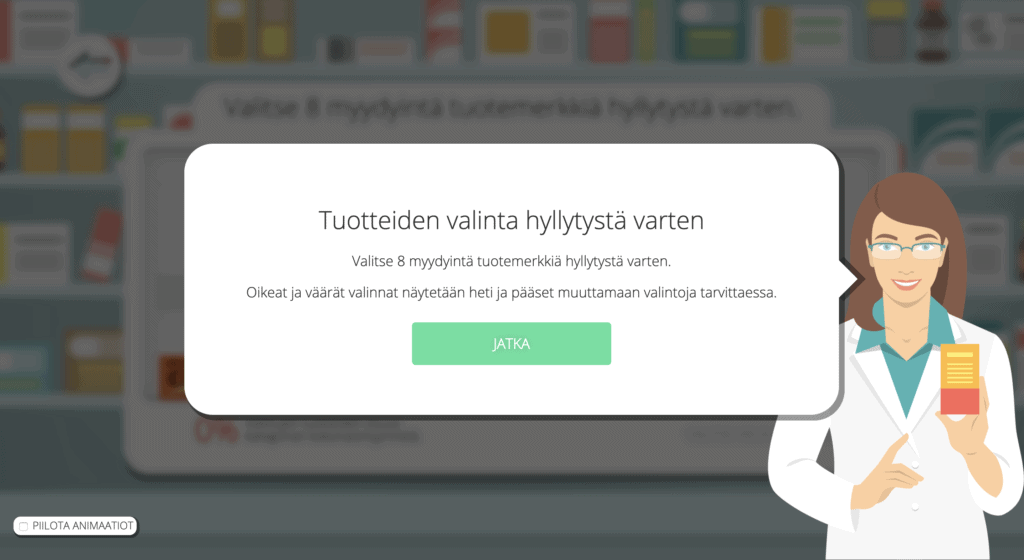
Gamified application engages
The purpose of gamified application is to motivate the user or customer and get him to return to the service later. The application can take advantage of elements familiar from video games such as scoring or points. You can get points even by registering in the application and, for example, updating your own profile. By collecting points, the app can have a progress bar that, when filled, gives the customer or user virtual coins. These virtual coins can then be used to shop at the actual store or company.
In some games, competition against other players is a key feature. In this case, a scoreboard measuring progress can be built into the application, which is used to compare users with each other. This creates competition between users, which increases loyalty to the application. By collecting points and accumulating progress, the customer or user can earn virtual badges or medals. Badges of Merit are also used in the world of entertainment games, which are a sign of crossing or achieving a certain stage or milestone. The use of merit tokens increases the user's loyalty to the application.
Serious games aiding teaching and training
Serious games are meant to be not only entertaining but also educational, although in a fun way. Serious games are used in many different fields, for example in teaching, they help students to focus on teaching in engaging ways. Games can be used to learn new languages or even develop math skills.
Serious games and gamification have many different benefits. Brain games are games that are made to help with cognitive development. Brain games consist of various problems and puzzles that the player must solve. It has also been studied that students remain focused for longer when serious games are used in teaching. Immersion in games also added positive feelings.

If you have any questions about gamification, we will be happy to tell you more. Contact Jonna 050 307 6756 or Merih 044 751 0096. The MeKiwi team will be happy to plan with you how to make your digital solutions more engaging and motivating through gamification! Call us and we will tell you how we can help.
Our account manager Jonna Ranta acted as an expert in an article published by Bonnier Pro, which dealt with increasing customer commitment and loyalty through gamification. Here you can find the attached article which is in finnish only.
Bonnier_Pro_ASI_1-2020
SOURCES
Kortela, A. 2020. Asiakkaiden sitoutumisen ja lojaalisuuden kasvattaminen pelillistämällä. Viitattu 7.9.2020.
Deese, A. 2020. 5 Benefits of Gamification. Viitattu 4.9.2020, https://ssec.si.edu/stemvisions-blog/5-benefits-gamification
Grendel Games 2020. What are serious games. Viitattu 4.9.2020, https://grendelgames.com/what-are-serious-games/
Kitola, M. 2013. Pelillistäminen ja mobiilisovellukset. Viitattu 7.9.2020, https://jyx.jyu.fi/bitstream/handle/123456789/42915/1/Mikael%20Kitola.pdf


Promoting digital equality for young people in Finland
Digitalisation has currently become a trendy buzzword, and many industries are relying on the advances made in the field of information technology.
Most of the services in Finland and the rest of the world have moved to the online world, so it is important that today's young people have the opportunity to try and adapt to this ever-changing digital environment.

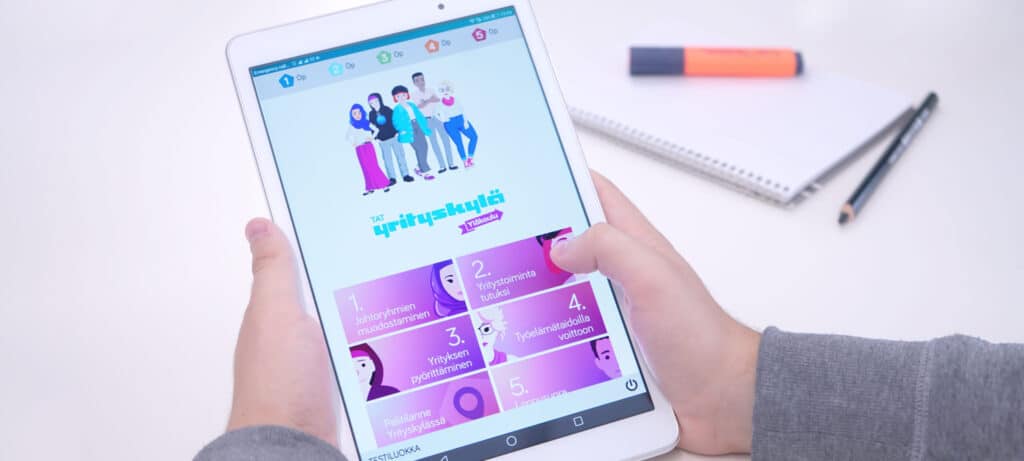
The Yrityskylä learning solution for primary school meets these needs with its own socio-economic education platform, teaching sixth-graders about working life and society. In the small town made by the schoolchildren, students also learn to act as responsible consumers and can, for example, test the leisure opportunities offered by digitalisation with the latest services, such as the Yrityskylä VR art experience game, Controlled Chaos.
MeKiwi was happy to participate in the production of a virtual art experience in Yrityskylä for sixth-graders across Finland. The art experience called Controlled Chaos allows children (and adults) to create their own immersive work of art in virtual reality.
The main priority for Yrityskylä was to create an experience that does not require schoolchildren to have previous virtual reality experience before trying out the art experience, as not all children have the latest technology at home.
With our expertise in UX design and VR game development, we were able to create an intuitive experience where rules and instructions could be abandoned and which relied solely on children’s natural curiosity and their ability to adapt to new things in a short amount of time.
Design pillars for a smooth VR use experience
- Base it on real life. The key to a smooth VR experience is to think about what the user would do in a real situation. Pay special attention to your own behavior during the day and think about how it would turn into a VR experience.
- Avoid written instructions. Reading text in a virtual reality environment can be difficult for those users with poor eyesight. It can also lead to translation problems if your target audience is multilingual. One way around this is to use audiovisual cues, such as arrows to indicate points of interest, as well as haptic feedback through the controller.
- Keep it simple. Virtual reality can be a mind-boggling experience for a first-timer, and getting used to this new device can take some time. Therefore, product developers should strive to keep the simulation simple in terms of both graphics and tasks. This way, users can familiarize with the platform. As you gain experience with the following exercises, you can be given more complex tasks.

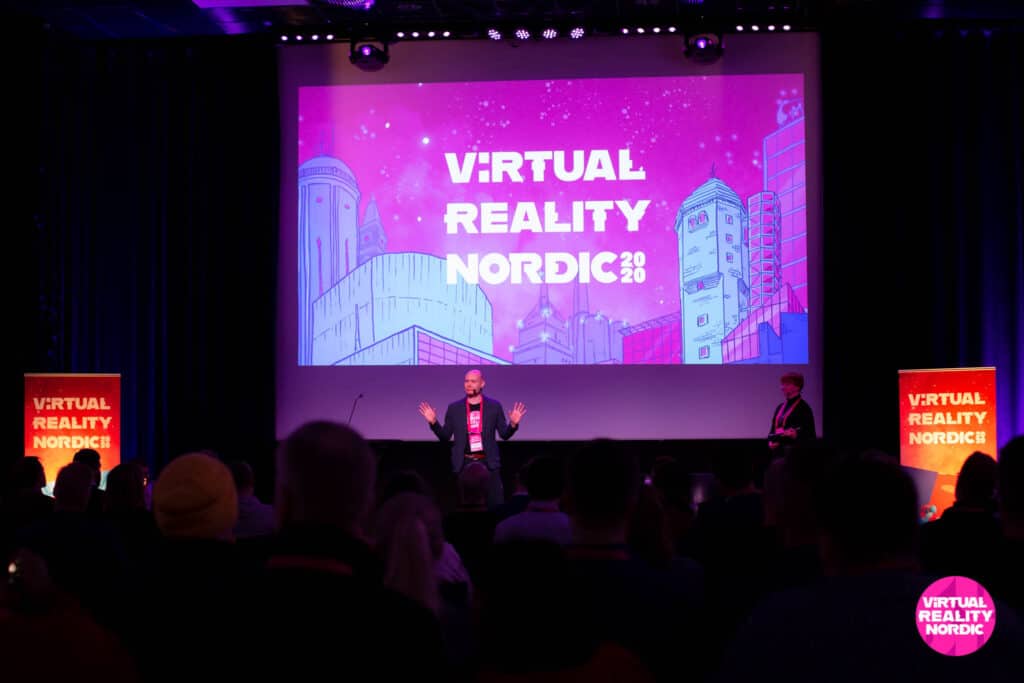
Couldn't make it to the Virtual Reality Nordic 2020 Event? Here's the summary of what happened during the day
The Virtual Reality Nordic 2020 event organised in Oulu by MeKiwi Oy gathered nearly one hundred and fifty business representatives interested in the possibilities of VR technology and a number of industry experts.
The main venue of the event was the Aurora hall of the Hotel Lasaretti and the most enthusiastic guests had arrived well in advance. Samuel Kuosmanen, CEO of Mekiwi Oy, started the event with a welcome speech. After that, the energetic and charismatic Niina Karvinen took over as the event's host Niina is a business developer and influencer based in the Oulu region. Karvinen describes herself as an enthusiast who wants to help others succeed. In addition to her energy, many networking pods with a variety of services were used to make the day more enjoyable and create a special atmosphere for the whole event.

Virtual reality as a training environment
The first speaker of the day was Kim Härköki from Varjo Technologies Oy, who opened up the potential of VR technology, especially from a healthcare perspective. In healthcare, virtual reality is particularly used as an educational environment. Härkönen showed how surgeons practice complex and challenging open surgeries using virtual reality. The presentation highlighted the importance of changing the world by working together and using modern technology.
After Härkönen, there was the first keynote speaker of the day. Sami Heinonen from Zoan, who calls himself XR Evangelist, highlighted the added value of virtual reality across different business areas. Heinonen's presentation included many visually impressive demos and he convinced the audience of the potential of XR technologies.
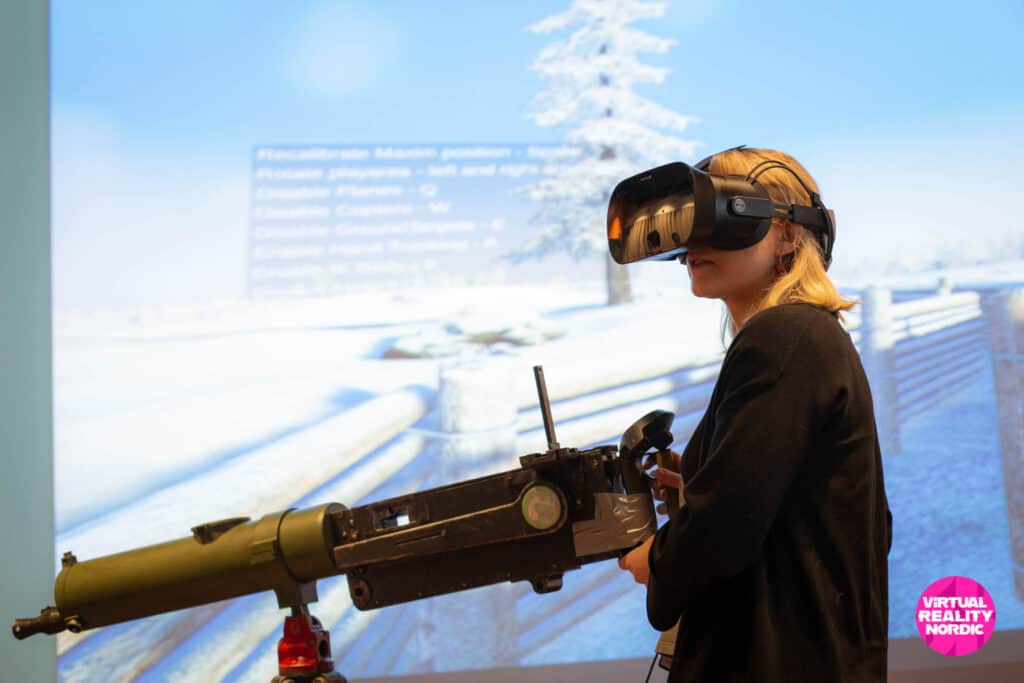
After a networking break, Pekka Ouli from the vocational school of North Central Finlandtook the stage. He told the audience about advanced digital learning environments and how virtual reality enables completely new dimensions in learning. After Ouli, the stage was taken over by Jonas Rajanto (Grape People Finland). Rajanto gave an in-depth presentation on the benefits of VR technology for distance learning. Remote virtual meetings are similar to face-to-face meetings. Among other things, they make it easier to assess the emotional states of the participants and thus lead to more genuine interaction. The highlight of Rajanto's presentation was definitely the live demo, in which he was joined by a few brave visitors to the event. The demo was a great demonstration of how the virtual meeting increased the cohesion and focus of the participants on the topic at hand.
After a rich buffet lunch and networking, the programme continued in the Aurora hall. Tommi Teronen from Teatime Research gave a presentation on solutions for the cultural and entertainment sector. Iikka Finning from Nokia explained how they use VR technology in research and Orkun Ceylan from 3D Talo presented a VR solution in use at Ponsse. Before the second keynote speaker of the day, Jani Kaipainen, founder of MeKiwi, speculated on the future of artificial intelligence with its opportunities and threats. In the afternoon, there was also the opportunity to participate in workshops organised by Oulu University of Applied Sciences in connection with the VIRTU project. The workshops explored Teatime Research's immersive cultural experiences and Glue's virtual reality platform that allows users to collaborate remotely.
Addressing future challenges
The final speaker of the day before the panel discussion was the second keynote speaker of the event, who many in the audience had specifically gathered to listen to. Steven LaValle from the University of Oulu, a pioneer in virtual reality and robotics, did not disappoint this time either. He summed up the essentials nicely. LaValle sees the key to success as a constant desire to learn and the ability to accept critical feedback. Solving the challenges of the future requires cooperation. Bold testing of ideas and openness will take us step by step forward, LaValle concluded. The Virtual Reality Nordic event ended with an interesting panel discussion, led by the usual moderator, Karvinen. The panel included Kim Härkönen from Varjo, Begum Dogan from MeKiwi, Natasha Skult from MiTale and Steven LaValle from the University of Oulu.
The wonderful day included a wealth of VR-related case studies from the business world. Visitors also had the opportunity to try out the latest VR solutions in the form of demos provided by exhibitors. The day also included interesting workshops to solve practical challenges using virtual reality.
The presentations at the event showed that VR technology has come a long way and the use cases have diversified. It is clear thatvirtual reality is here to stay. It continues to grow in popularity and there is no reason to doubt that it will continue to grow as technology advances and the price of virtual glasses falls. Virtual Reality Nordic 2020 demonstrated with practical examples how VR technology brings many benefits as a design tool, an educational environment, a marketing enabler and an enabler of remote viewing.

Selling one thing is the first step to sell another
There are many steps involved in developing a good digital product. Organizing user testing and collecting user data are important stages that should be handled properly. Good networks help with this, too.
Cooperation produces better innovations. A technological collaboration in particular helps the likelihood of a small business succeeding in innovation. Still, some studies show that small firms have fewer innovation cooperation than large firms.
Earlier this year, we published a blog about how the principles of open innovation have benefited MeKiw’s development and growth. As we have been asked a lot about this topic, we will publish a series of three blogs where we explain on a practical level how we implement innovation cooperation.
Previously we have covered the search for a business opportunity and the stage of project implementation. In this part, we'll talk about the collaborations in the user testing and publishing phases.
Each development team is blind to their own work
Product testing already starts in the project phase, which we described in the previous part of this blog series. Testing of all digital products must be carried out in many stages and in different ways. There is no known public, continuously available service for user testing, but by being active and staying informed, opportunities may arise. Participation in the Edudigi project enabled MeKiwi to test the VR game in Oulu's Tietomaa. However, most of the testing is organised in-house. You need networks for that too.
"Influencers are important contacts with ordinary consumers," says Begum Dogan.
Influencers are used to reach active players, but you also want people with no previous gaming experience to become testers. The flaws in the game are found because they do not know how to adapt to them.
Each development team is blind to its own game and can't see its weaknesses", points out Begum Dogan.
In addition to reaching testers, other contacts are needed. A third party brings its vision and ideas to the collaboration. It gives a perspective on things when you can easily be too focused to notice.
The gaming marketing company Kuvion complements MeKiwi's marketing team. Kuvion is deeply integrated in the marketing of Cave Digger, a game published by MeKiwi on VR platforms. "In this partnership, everyone is in charge," says Begum Dogan. "The friends at Kuvion take care of VR Cave Digger as if it was their own".
Wishing for a B2B meeting place in Oulu
An important channel for MeKiwi to get feedback on the released product has been the export trips organised by BusinessOulu to key markets in the games industry. While showcasing a published product, it also lays the groundwork for new projects. Developing a game for the international consumer market builds internal expertise and networks that also benefit the domestic market.
"Aatu Numminen, VR and B2B Customer Relationship Manager at MeKiwi, expects the opening of the BusinessAsema in Hallituskatu to create a positive environment for cooperation. ”I hope it will be a B2B meeting place, similar to what the Pelikampus is for the companies in the gaming sector"
"I like the pop-up idea. I could very well go there to present our VR entertainment games production," Numminen envisions. "People might well come up with new ideas. Then it's just a matter of planning how to implement them."
Research background
MeKiwi was one of the companies surveyed in a study conducted as part of the Innovation Alliance's Accelerating Operations project, which also included a master's thesis entitled “The Innovation Process of a Startup Company in a Regional Innovation Cluster”. The key finding of the study was that start-ups can benefit from the regional innovation ecosystem at all stages of their innovation process, both by using innovation support services and by establishing meaningful networking relationships. The study divided the innovation process into three stages according to the customer-driven Design Thinking innovation process model. In this series of three blogs, we describe how we implemented the principles of open innovation in line with these three stages.
Sources:
- Brown, T. (2009). Change by design: How design thinking can transform organizations and inspires innovation. New York (N.Y.): HarperBusiness.
- Chesbrough H. (2003) The era of open innovation. MIT Sloan Management Review; 44:35–41
- Crossan, M & Apaydin, M. (2010). A Multi-Dimensional Framework of Organizational Innovation: A Systematic Review of the Literature. Journal of Management Studies, 47(6), 1154–1191.
- Freel, M. S. (2005). Patterns of Innovation and Skills in Small Firms. Technovation, 25(2), 123–134.
- Nieto, M. J. (2010). Technological Collaboration: Bridging the Innovation Gap between Small and Large Firms. Journal of Small Business Management, 48(1), 44–69.
- Parida, V., Westerberg, M. ja Frishammar, J. (2012). Inbound Open Innovation Activities in High-Tech SMEs: The Impact on Innovation Performance. Journal of Small Business Management 2012 50(2), 283–309.
- Rogers, M. (2004). Networks, Firm Size and Innovation. Small Business Economics, 22, 141–153.
- Sydänmaanlakka, P. (2009). Jatkuva uudistuminen: Luovuuden ja innovatiivisuuden johtaminen.Hämeenlinna. Talentum Media Oy. 293 s.
Working together for the best combination of skills
Collaboration between companies allows you to build a team for each project that can best meet your needs. This creates good conditions for learning and ensures future competitiveness. The profitability of projects will also improve.
Cooperation produces better innovations. In particular, technological cooperation increases the likelihood that a small firm will succeed in innovation. Still, some studies show that small firms have fewer innovation cooperation than large firms.
Earlier this year, we published a blog about how the principles of open innovation have benefited MeKiwi’s development and growth. As we have been asked a lot about this topic, we will publish a series of three blogs where we explain on a practical level how we implement innovation cooperation.
In the previous blog, we discussed the search for a business opportunity. In this section we describe the implementation phase of the project and in the next section we move on to the market entry phase.
The social network is an important vehicle for knowledge
One of the key principles of open innovation is to understand that not all the top people in the industry work in your own company, even if you are proud of your own team. We also want to work with talented people outside the company. It expands opportunities to pick up different projects and develop them. This situation has already been considered in the search for a business opportunity.
The Oulu Game Lab has been the main source of internal skills development for MeKiwi. In addition to growing the gaming workforce, Oulu Game Lab has been instrumental in creating many partnerships. This is where close relationships with game companies such as Kaamos Games and Happy Hobgoblin come from.
Another important source of knowledge is the social network of entrepreneurs and workers themselves. Through a social network, a connection was made with the game studio Reforged Studios, whose busy backlog just happened to fit MeKiwi's need. This working relationship was also mediated through the network.
"I shared my concerns about resource adequacy with the right person. He happened to know that Reforged Studios has some free time between two of their projects. A small tip had a big impact when MeKiwi was able to complete its own team in a strategically important project," says Jonna Ranta, Customer Success Manager at MeKiwi.
In a true cooperation, all parties learn
Some partnerships are based on contracts, but resources are also shared informally with close partners. MeKiwi was one of the companies studied in a Master's thesis on the innovation process of start-up companies at the faculty of Economics of the University of Oulu. The surveyed start-ups reported that they shared resources such as documents, technology, graphics and equipment during the project implementation phase. Interviewees also reported cooperation in sharing knowledge and skills, either through discussion or by lending employees to another company's project. Traditional subcontracting is also used. MeKiwi recognises most of these. Sharing resources improves the profitability of projects, but reducing costs is not the only reason.
"Using external resources enables us to bring together the best combination of expertise for each project," explains Jonna Ranta. "This of course benefits our customer".
With the help of external expertise, you can always reach a little higher by learning things that will be useful later on. "We always look for situations where everyone benefits from cooperation," says Jonna Ranta. "This will secure the future of the business. And it's nice to work in a good atmosphere!"
If you want to hear more about how winning teams are built, just give Jonna a call. Jonna is happy to talk about project management issues. Jonna's phone is 050 307 6756. Let's have a chat!
Background of the study
MeKiwi was one of the companies surveyed in a study conducted as part of the Innovation Alliance's Accelerating Operations project, which also included a master's thesis entitled “The Innovation Process of a Startup Company in a Regional Innovation Cluster”. The key finding of the study was that start-ups can benefit from the regional innovation ecosystem at all stages of their innovation process, both by using innovation support services and by establishing meaningful networking relationships. The study divided the innovation process into three stages according to the customer-driven Design Thinking innovation process model. In this series of three blogs, we describe how we implemented the principles of open innovation in line with these three stages.
Sources:
- Brown, T. (2009). Change by design: How design thinking can transform organizations and inspires innovation. New York (N.Y.): HarperBusiness.
- Chesbrough H. (2003) The era of open innovation. MIT Sloan Management Review; 44:35–41
- Nieto, M. J. (2010). Technological Collaboration: Bridging the Innovation Gap between Small and Large Firms. Journal of Small Business Management, 48(1), 44–69.
- Parida, V., Westerberg, M. ja Frishammar, J. (2012). Inbound Open Innovation Activities in High-Tech SMEs: The Impact on Innovation Performance. Journal of Small Business Management 2012 50(2), 283–309.
- Sydänmaanlakka, P. (2009). Jatkuva uudistuminen: Luovuuden ja innovatiivisuuden johtaminen.Hämeenlinna. Talentum Media Oy. 293 s.

Open innovation as a key driver of growth
MeKiwi's growth and development is based on the principles of open innovation. They have boosted productivity and efficiency and increased the number of business opportunities. We want to share our approach to open innovation with others, as the topic is becoming increasingly popular. Open Innovation is an important part of the European Union's next framework programme, Horizon Europe.
Open innovation is based on knowledge and technology sharing and collaboration between companies. Cooperation has contributed significantly to MeKiwi's rapid development and growth.
MeKiwi was one of the companies surveyed in a study on the innovation process of start-up companies carried out as part of the Oulu Innovation Alliance's "Accelerating Innovation" project. The study was also used as the basis for a PhD thesis at the University of Oulu School of Economics.
The thesis divided the innovation process into three stages. In this blog, we describe how we have implemented open innovation at these stages, using the digital learning solutions we have developed as examples. These sections are structured according to the appropriate open innovation principles.
We don't need to do our own research to create business
Finding business opportunities and identifying resources are part of the first stage of the innovation process. The partnership with PlayGain provides open innovation on both sides. The involvement of MeKiw provided PlayGain with the necessary resources to commercialise its research activities. PlayGain, on the other hand, offered MeKiwi the opportunity to do business with its own knowledge capital. The result of this collaboration is Productive Manager, an educational game for managers and HR professionals, based on research on the link between well-being and productivity.
We don't need all the top talent to work for us
In the actual implementation phase, projects need the right combination of knowledge and skills. This is done both by strengthening internal skills and by acquiring them from outside. MeKiwi has been able to grow by taking on progressively larger and more challenging projects. Success in combining internal and external expertise is an important factor in this.
The cooperation with Yrityskylä, which teaches youth economic and working life skills, started with the renewal of teaching materials for the Upper and Lower Secondary Schools and the construction of a comprehensive Teacher portal enrolment system. The collaboration will now continue to produce the VR solution to be released later. This was made possible by MeKiwi's active involvement with the Oulu Game Lab. By participating in Oulu Game Lab events and coaching students, game entrepreneurs have kept up to date with the growing body of knowledge. Among the students in autumn 2018, a VR team stood out, ready to go straight to work. MeKiwi recruited the whole team, which allowed us to create the ideal mix of skills for the different projects. The development teams will continue to be supported from outside the company as necessary. Reliable partners include Kaamos Games, Happy Hobgoblin and Reforged Studios.
The best combination of internal and external ideas
The final stage of the innovation process is delivering the product to the customer or launching the product on the market. This phase also includes the subsequent updates and maintenance activities. From an innovation perspective, this links back to the previous step, where the right mix of knowledge and skills will determine success.
The support provided by public actors in the innovation ecosystem should be utilised. Fairs are a great place to network with other entrepreneurs and experts. A trip to the BETT2019educational technology fair organised by the Future of Smart Learning Environments project gave us a valuable insight into developments in the sector as a whole.
Taking a product to market often involves participating in international trade fairs. BusinessOulu business services' export-related services, such as export promotion trips, are an important enabler of internationalisation for small businesses. VRKiwi, MeKiwi's virtual reality games division, has travelled to international game fairs with our own product, VR Cave Digger. Our own marketing team is complemented, where necessary, by Kuvion, a games marketing digital company.
Travel to trade fairs also plays a role in how future solutions are produced. Participation in trade fairs increases understanding of customers and the industry. At the fair, you can find partners to collaborate with and share ideas. This will help identify business opportunities and resources. A new innovation process begins.
"I don't know if it makes sense to distinguish between external and internal innovation," says Samuel Kuosmanen, CEO of MeKiwi. "Both are the result of interaction. Let's try to understand what it feels like from another's perspective. That is why all networking events are valuable. We have always been curious and often participated in innovation services and events."
Involvement in training organisations, for example as mentors, has proved particularly useful.
"We have both made great recruits and got great ideas from the events," summarises Kuosmanen. MeKiwi is about to start a programme where employees are able to spend a certain amount of working time developing their own ideas. " Let's create the conditions for innovation by giving people the freedom during their training to put their ideas into practice, and develop the skills they want to develop."
MeKiwi's practical approach to open innovation
Open innovation creates opportunities, especially for a small company in its early stages, which still has the capacity for rapid change. MeKiwi's approach to open innovation has evolved from a practical need to generate business and an attitude of not leaving the customer alone. We offer comprehensive solutions and bring together the resources you need. At the same time, our own capacity for ever more ambitious development work is growing.
Why is open innovation important now?
The commercialisation of research offers opportunities for small technology companies that are able to operate according to the principles of open innovation. Right now, significant investments are being made in this area.
Horizon Europe is the European Union's future framework programme for research and innovation for the period 2021-2027. The programme covers support for research and innovation from the idea stage to market launch, complementing national and regional funding.
One of the three pillars of Horizon Europe is open innovation. It includes the challenges of translating research results into marketable innovations. This will be done by developing innovation ecosystems and supporting the commercialisation and scaling-up of innovations.
On 7 June 2019, information about Horizon Europe will be available especially for ICT companies at the Tellus Innovation Arena at the University of Oulu.
At the Horizon Europe and ICT event on 7 June from 8.30-11am, you can also listen to MeKiwi's Customer Success Manager Jonna Ranta, who will be happy to talk about commercialisation of research and other innovation issues. Come have a chat with Jonna!
Jonna can also be reached by phone on (+358) 50 307 6756.
Sources:
- Brown, T. (2009). Change by design: How design thinking can transform organizations and inspires innovation. New York (N.Y.): HarperBusiness.
- Chesbrough H. (2003) The era of open innovation. MIT Sloan Management Review; 44:35–41
- Crossan, M & Apaydin, M. (2010). A Multi-Dimensional Framework of Organizational Innovation: A Systematic Review of the Literature. Journal of Management Studies, 47(6), 1154–1191.
- Parida, V., Westerberg, M. ja Frishammar, J. (2012). Inbound Open Innovation Activities in High-Tech SMEs: The Impact on Innovation Performance. Journal of Small Business Management 2012 50(2), 283–309.
- Sydänmaanlakka, P. (2009). Jatkuva uudistuminen: Luovuuden ja innovatiivisuuden johtaminen.Hämeenlinna. Talentum Media Oy. 293 s.

The virtual reality game Cave Digger is released on Steam and the Oculus Store
Press release 7.5.2018
The launch event for Cave Digger will take place on 9 May at VR_Heaven, Oulu's first VR arcade. The game will be released just after midnight on 10 May.
The game is set in a small Wild West village saloon in an alternate universe. In the background, a newsreader plays the game over the radio as the player, the main character, begins their journey from the mysterious saloon. They grab their pickaxe and takes the lift down to the mine shaft. By digging minerals and other treasures from the walls of the pit, the miner can collect money and use it to upgrade tools. Beneath the layers of stone, there are many secrets for the player to discover and experience.
We are very excited about the release of our first game and we strongly believe that this is just the start of something big. Cave Digger has already received a lot of good feedback. We can't wait to see what happens next!" says Begüm Doğan, Marketing Manager at VRKiwi.
Jani Huhtamella, CEO of VR_Heaven also says about the event, "It's great to be involved in making Finnish and Oulu gaming history together with VRKiwi. Events like this show that Oulu has the know-how to share with others. Oulu now also demonstrably has the know-how that makes it possible to use virtual reality in a variety of ways. This opens up a whole new market for the city. Call Oulu and order VR softwares, simple."
The game is designed to fit both living rooms and VR gaming rooms. The game rounds are short, so it's easy to change players in between and enjoy the game with friends. Gear yourself and experience the depths of the abyss!
Trailer: https://www.youtube.com/watch?v=HF5qK0lTZ_U
Steam Store page: https://store.steampowered.com/app/844380/Cave_Digger/
Developer: MeKiwi
Publisher: MeKiwi
Genre: Action, indie, virtual reality
Release date: 10th May 2018
Price: Free
Homepage: https://vrkiwi.org/
Facebook: https://www.facebook.com/cavediggergame/
Twitter: https://twitter.com/vr_kiwi
More info about VRKiwi:
VRKiwi is part of MeKiwi, a full-stack digital agency based in Oulu. MeKiwi produces games for VR platforms, mobile and web. Services also include software production, graphic design and digital marketing. The number of employees is 15.
More info:
In English:
In Finnish:
Company news!
The period between autumn rains and winter storms is a good time to be in the office. We have been working hard as a team. Read here. what's so interesting going on now. You can also enter the competition!
Virtual reality game takes gold and riches underground
The most fun we've had this autumn has definitely been a collaboration project with game studio Happy Hobgoblinand game marketing agency Kuvion. A new VR game, Cave Digger Riches, takes you deep underground in search of gemstones and other valuable minerals. The western feel of the game is mixed with an appropriate amount of sci-fi in the form of laser cutters, scanners and other tools.
The first tests have already taken place at the Tietomaa Science Centre. The development of the game is part of the EduDigi project, which is why a number of teachers were there to test it. A different school day for them too!
A demo version of Cave Digger Riches will be released in spring 2018. Before that, the game's website and social media channels will be launched. We'll keep you informed about the progress of the project along the way. Stay tuned for more!
Well-being at work pays off
PlayGain's Productive Manager simulation is based on scientific research that proves that increased well-being at work also improves productivity at work. Constant change and problems demand professionalism from managers. Investing in skills pays off, as good leadership enables a significant improvement in competitiveness. To find out how, you can explore and learn by playing the Productive Manager game. By playing, you can see the impact of your choices on well-being and productivity at work. The game provides information and feedback on your skills.
A manager's success at work becomes apparent slowly and quietly, without making a fuss of themselves. Now you can also gain individual fame and glory by playing!
Now PlayGain has announced the Best LEAN Manager in Finland competition. The competition is free and open to all. You don't have to be a manager to enter the competition. During the competition period, you can play Productive Manager online for free. Let's see how you would do in a test environment.
The competition is open until 1.12.2017. The best players will be rewarded!
Best LEAN Manager in Finland competition
Service vouchers give a boost to your business start-up
Business Oulu again offers significant support to start-ups. A service voucher worth €1000-5000 is a great way to get a service or product off the ground.
MeKiwi is also a service provider of the Business Oulu Service Voucher. The first voucher customers are already being assisted. Interesting things are coming up there too!
Read more about MeKiwi's voucher services in our blog.
At the same time, website, mobile development and all aspects of the digital world will continue as before. Whatever is on your mind, it's worth a call! Let's get some coffee brewing and sit down.
Have a very good autumn - stay tuned!
Jani Kaipainen & Kiwi team

The Service Voucher gives support to a start-up business
The Business Oulu Service Voucher provides the necessary support for a start-up business. A voucher worth €1000-5000 is already a great boost for the commercialisation of a service or product.
In the first phase, businesses that have been operating for less than one year can apply for a business service voucher. In the next phase, the business service voucher will be extended to businesses that have been operating for less than 5 years.
The service voucher can be used to buy expert services from another company to help your business grow. The company must be a registered service provider.
This is a major boost to the commercialisation of a service or product.
MeKiwi is a service provider of the Business Oulu Service Voucher.
We offer six key services to help young companies develop their business.
The services are worth between 4000€ and 5000€.
1 Mobile app design
Designing a mobile app starts with understanding what you need it for. Is it used by the company's employees or customers? Or does the app act as a channel to connect different parties?
Our team of experts will start from these points to integrate the application into your business. A well designed mobile app drives action towards your goals.
Designing a mobile application that supports your business includes:
1. Background and user research
Determine the user needs by interviewing the target audience.
2. Building scenarios for the product.
Why, where and in which situations is the mobile app used? We consider the technological limitations: what solutions can be done - and what makes sense.
3. User interface drafts.
What could the mobile app look like? How does the app support your brand?
If the mobile app is aimed at the market, we also look at how much it could cost and what kind of monetisation model it could follow. Would your product be scalable to other markets, or suitable for other purposes? On this basis, your mobile app becomes a demo that you can use when applying for funding to enter international markets, for example.
2 Business planning for a digital environment
Digital tools make things easier. Why make it difficult when you can make it easy? In our service package, we plan how you can make your business more efficient by using digital services. Let's find the right digital tools for your business.
You know what you want to achieve. We'll find the things that cause issues. We tell you what, where and how you could do things more smoothly with digital solutions.
3 Planning international business in a digital environment
Digital platforms enable the production and distribution of services worldwide. As part of the service package, we plan how you can expand internationally - or enhance your existing operations there.
We help you find the right digital tools for your business, analyse your business image in an international environment and the scalability of your product in your target market.
One way in which a start-up company can particularly benefit from this service is by commissioning a prototype or demo. A prototype or demo is needed when applying for a funding to export your product.
4 Developing and exploiting VR and AR innovations in business.
Virtual reality (VR) and augmented reality (AR) deliver information in a completely different way than any previous technology.
Both can be used to play, either for recreational or educational purposes. All kinds of spatial and informational displays also work very well in VR and AR environments.
Working in a virtual environment is always about experience and emotion. This helps learning and remembering.
There is no need to teach a user to play virtually - with prices coming down, virtual glasses are already widely adopted by consumers.
As technology becomes more widespread, customised solutions are possible for more people. We can map the content of the service according to your needs. As an example, here is the conceptualisation of a virtual reality educational game in a nutshell:
1. Background and user research
Determine the user needs by interviewing the target audience.
2. Building scenarios for the product.
Why, where and in which situations would the game be used? We consider the technological limitations: what solutions can be done - and what makes sense.
3. User interface drafts.
Read more about the possibilities of the virtual world here. These are just examples - new ways to use the VR platform are being invented all the time. Maybe for you too!
5 Game testing
We test VR and mobile games on target audiences. We collect user experiences and ideas for further development in a report. We can use Oulu’s Tietomaa Science Centre as a testing environment, which is particularly useful when we need to test the game with a large number of users.
6 Concept design for a gamified service/tool
The game offers a way to improve customer satisfaction, build relationships and stay in touch with the customer. Gamification starts with getting to know the customer. What does the customer want and need, and what kind of action will they agree to? The starting point for gamification is a need – something you want to promote. Gamification can be used to support, guide, motivate or engage the user.
A gamified service does not have to look like a game. Game features are targeted to appropriate areas within the service.
The number one priority is the user experience. This includes the activity of the user, the responsiveness of the application, the structure of the application, its appearance and also the sound. Simplicity and efficiency are the key words here.
Designing a gamified service:
1. Background and user research
Determine the user needs by interviewing the target audience.
2. Building scenarios for the product.
We look at why, where and in what situations the mobile app is used. We consider the technological limitations: what solutions can be done - and what makes sense.
3. User interface drafts.
Whatever your needs, you can be sure that doing something like this will take you a long way. Click on the Business Service Voucher service catalogue here. There you will also find MeKiwi's services. There you go!