

Couldn't make it to the Virtual Reality Nordic 2020 Event? Here's the summary of what happened during the day
The Virtual Reality Nordic 2020 event organised in Oulu by MeKiwi Oy gathered nearly one hundred and fifty business representatives interested in the possibilities of VR technology and a number of industry experts.
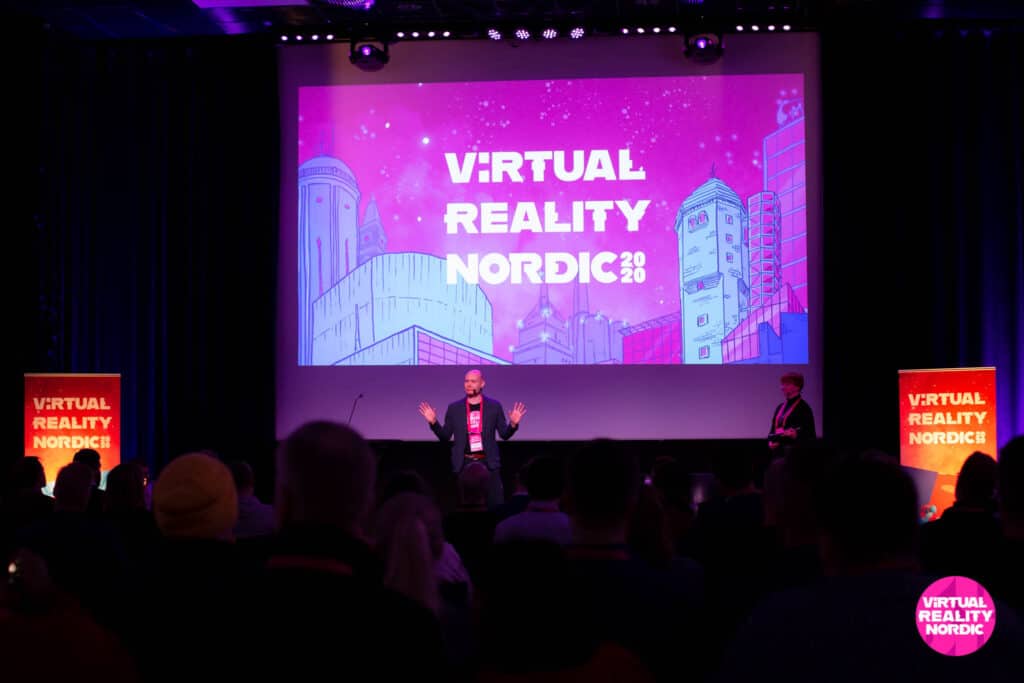
The main venue of the event was the Aurora hall of the Hotel Lasaretti and the most enthusiastic guests had arrived well in advance. Samuel Kuosmanen, CEO of Mekiwi Oy, started the event with a welcome speech. After that, the energetic and charismatic Niina Karvinen took over as the event's host Niina is a business developer and influencer based in the Oulu region. Karvinen describes herself as an enthusiast who wants to help others succeed. In addition to her energy, many networking pods with a variety of services were used to make the day more enjoyable and create a special atmosphere for the whole event.

Virtual reality as a training environment
The first speaker of the day was Kim Härköki from Varjo Technologies Oy, who opened up the potential of VR technology, especially from a healthcare perspective. In healthcare, virtual reality is particularly used as an educational environment. Härkönen showed how surgeons practice complex and challenging open surgeries using virtual reality. The presentation highlighted the importance of changing the world by working together and using modern technology.
After Härkönen, there was the first keynote speaker of the day. Sami Heinonen from Zoan, who calls himself XR Evangelist, highlighted the added value of virtual reality across different business areas. Heinonen's presentation included many visually impressive demos and he convinced the audience of the potential of XR technologies.
After a networking break, Pekka Ouli from the vocational school of North Central Finlandtook the stage. He told the audience about advanced digital learning environments and how virtual reality enables completely new dimensions in learning. After Ouli, the stage was taken over by Jonas Rajanto (Grape People Finland). Rajanto gave an in-depth presentation on the benefits of VR technology for distance learning. Remote virtual meetings are similar to face-to-face meetings. Among other things, they make it easier to assess the emotional states of the participants and thus lead to more genuine interaction. The highlight of Rajanto's presentation was definitely the live demo, in which he was joined by a few brave visitors to the event. The demo was a great demonstration of how the virtual meeting increased the cohesion and focus of the participants on the topic at hand.
After a rich buffet lunch and networking, the programme continued in the Aurora hall. Tommi Teronen from Teatime Research gave a presentation on solutions for the cultural and entertainment sector. Iikka Finning from Nokia explained how they use VR technology in research and Orkun Ceylan from 3D Talo presented a VR solution in use at Ponsse. Before the second keynote speaker of the day, Jani Kaipainen, founder of MeKiwi, speculated on the future of artificial intelligence with its opportunities and threats. In the afternoon, there was also the opportunity to participate in workshops organised by Oulu University of Applied Sciences in connection with the VIRTU project. The workshops explored Teatime Research's immersive cultural experiences and Glue's virtual reality platform that allows users to collaborate remotely.
Addressing future challenges
The final speaker of the day before the panel discussion was the second keynote speaker of the event, who many in the audience had specifically gathered to listen to. Steven LaValle from the University of Oulu, a pioneer in virtual reality and robotics, did not disappoint this time either. He summed up the essentials nicely. LaValle sees the key to success as a constant desire to learn and the ability to accept critical feedback. Solving the challenges of the future requires cooperation. Bold testing of ideas and openness will take us step by step forward, LaValle concluded. The Virtual Reality Nordic event ended with an interesting panel discussion, led by the usual moderator, Karvinen. The panel included Kim Härkönen from Varjo, Begum Dogan from MeKiwi, Natasha Skult from MiTale and Steven LaValle from the University of Oulu.
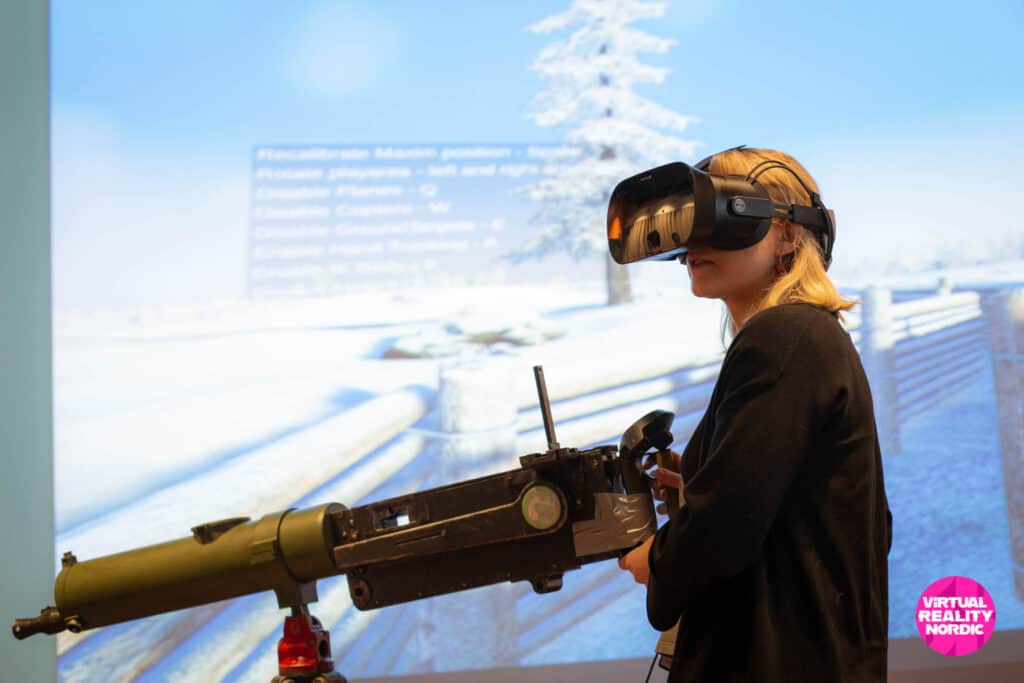
The wonderful day included a wealth of VR-related case studies from the business world. Visitors also had the opportunity to try out the latest VR solutions in the form of demos provided by exhibitors. The day also included interesting workshops to solve practical challenges using virtual reality.
The presentations at the event showed that VR technology has come a long way and the use cases have diversified. It is clear thatvirtual reality is here to stay. It continues to grow in popularity and there is no reason to doubt that it will continue to grow as technology advances and the price of virtual glasses falls. Virtual Reality Nordic 2020 demonstrated with practical examples how VR technology brings many benefits as a design tool, an educational environment, a marketing enabler and an enabler of remote viewing.


Creating innovation together
In November, MeKiwi participated in the Innovation Bootcamp in Pokhara, Nepal, which aimed to create new innovations for local needs. The event was organised by the Tribhuvan University (Institute of Engineering) in cooperation with the Nepal Go Association, an association founded in Oulu to promote education and employment in Nepal. The project was funded by the Gandaki provincial administration, and Mukti Paudel from Nepgo ry was the project leader for both countries.

Nepgo ry invited Finnish companies to participate in the event to mentor students and solve challenges together. MeKiwi was excited by the idea and decided to participate. From Finland came also Raimo Korhonen from KeepLoop, Kimmo Paajanen from OAMK and two guest lecturers, Janne Korhonen, PhD consultant from Aalto University and Anu-Maria Laitinen, knowledge management consultant.
The five-day event took place on the Paschimanchal campus. In addition to the invited companies, the event was attended by around 30 students and experienced local mentors, each with extensive knowledge of the issues at hand.
Challenges and ceremonies
The event started with a formal welcome ceremony on campus in honour of the guests. The mayor of the city and a local minister were also invited. During the ceremony, the guests were given flowers and were dressed in colourful Nepali headdresses. The morning was full of celebrations, as was the evening of the last day of the event.
The Bootcamp itself started with six different challenges to which the university students had to develop a solution together with representatives of companies. MeKiw was tasked to create a report on the level of digitalisation in Nepal, both on the business and education side. In addition to the report, the team looked at how to get parents more involved in their children's studies. As a solution, a "Wilma" type service, which we are also familiar with, was proposed. The mayor immediately agreed to pilot-test 10 schools, but full commercialisation of the service is a prerequisite for real implementation.

Again next year?
Samuel Kuosmanen, CEO of MeKiwi, was very pleased with the quality of the event. MeKiwi's goal for this trip was to identify business opportunities, build a network and identify local expertise. All these elements were implemented beyond expectations.
"I would definitely go again, as long as the trip is well planned in terms of purpose and appointments. It took a surprisingly long time to travel, but an international airport is being built in Pokhara, which will speed up travel in the future," Samuel summed up when asked if he would go again.
About Nepal
Nepal is a poor developing country surrounded by mountains, where more than 50% of the population lives on less than a dollar a day. Although people come from very simple backgrounds, they are very welcoming. The mountains have kept trade very limited with countries such as India and China. Recently, there has been a wake-up call on this issue and there is now a strong push for change. Tourism has played its part in boosting development and growth prospects are already looking bright. This will also create new opportunities, for example for Finnish educational exports and other cooperation. Now is therefore a very good time to invest in Nepal.

Selling one thing is the first step to sell another
There are many steps involved in developing a good digital product. Organizing user testing and collecting user data are important stages that should be handled properly. Good networks help with this, too.
Cooperation produces better innovations. A technological collaboration in particular helps the likelihood of a small business succeeding in innovation. Still, some studies show that small firms have fewer innovation cooperation than large firms.
Earlier this year, we published a blog about how the principles of open innovation have benefited MeKiw’s development and growth. As we have been asked a lot about this topic, we will publish a series of three blogs where we explain on a practical level how we implement innovation cooperation.
Previously we have covered the search for a business opportunity and the stage of project implementation. In this part, we'll talk about the collaborations in the user testing and publishing phases.
Each development team is blind to their own work
Product testing already starts in the project phase, which we described in the previous part of this blog series. Testing of all digital products must be carried out in many stages and in different ways. There is no known public, continuously available service for user testing, but by being active and staying informed, opportunities may arise. Participation in the Edudigi project enabled MeKiwi to test the VR game in Oulu's Tietomaa. However, most of the testing is organised in-house. You need networks for that too.
"Influencers are important contacts with ordinary consumers," says Begum Dogan.
Influencers are used to reach active players, but you also want people with no previous gaming experience to become testers. The flaws in the game are found because they do not know how to adapt to them.
Each development team is blind to its own game and can't see its weaknesses", points out Begum Dogan.
In addition to reaching testers, other contacts are needed. A third party brings its vision and ideas to the collaboration. It gives a perspective on things when you can easily be too focused to notice.
The gaming marketing company Kuvion complements MeKiwi's marketing team. Kuvion is deeply integrated in the marketing of Cave Digger, a game published by MeKiwi on VR platforms. "In this partnership, everyone is in charge," says Begum Dogan. "The friends at Kuvion take care of VR Cave Digger as if it was their own".
Wishing for a B2B meeting place in Oulu
An important channel for MeKiwi to get feedback on the released product has been the export trips organised by BusinessOulu to key markets in the games industry. While showcasing a published product, it also lays the groundwork for new projects. Developing a game for the international consumer market builds internal expertise and networks that also benefit the domestic market.
"Aatu Numminen, VR and B2B Customer Relationship Manager at MeKiwi, expects the opening of the BusinessAsema in Hallituskatu to create a positive environment for cooperation. ”I hope it will be a B2B meeting place, similar to what the Pelikampus is for the companies in the gaming sector"
"I like the pop-up idea. I could very well go there to present our VR entertainment games production," Numminen envisions. "People might well come up with new ideas. Then it's just a matter of planning how to implement them."
Research background
MeKiwi was one of the companies surveyed in a study conducted as part of the Innovation Alliance's Accelerating Operations project, which also included a master's thesis entitled “The Innovation Process of a Startup Company in a Regional Innovation Cluster”. The key finding of the study was that start-ups can benefit from the regional innovation ecosystem at all stages of their innovation process, both by using innovation support services and by establishing meaningful networking relationships. The study divided the innovation process into three stages according to the customer-driven Design Thinking innovation process model. In this series of three blogs, we describe how we implemented the principles of open innovation in line with these three stages.
Sources:
- Brown, T. (2009). Change by design: How design thinking can transform organizations and inspires innovation. New York (N.Y.): HarperBusiness.
- Chesbrough H. (2003) The era of open innovation. MIT Sloan Management Review; 44:35–41
- Crossan, M & Apaydin, M. (2010). A Multi-Dimensional Framework of Organizational Innovation: A Systematic Review of the Literature. Journal of Management Studies, 47(6), 1154–1191.
- Freel, M. S. (2005). Patterns of Innovation and Skills in Small Firms. Technovation, 25(2), 123–134.
- Nieto, M. J. (2010). Technological Collaboration: Bridging the Innovation Gap between Small and Large Firms. Journal of Small Business Management, 48(1), 44–69.
- Parida, V., Westerberg, M. ja Frishammar, J. (2012). Inbound Open Innovation Activities in High-Tech SMEs: The Impact on Innovation Performance. Journal of Small Business Management 2012 50(2), 283–309.
- Rogers, M. (2004). Networks, Firm Size and Innovation. Small Business Economics, 22, 141–153.
- Sydänmaanlakka, P. (2009). Jatkuva uudistuminen: Luovuuden ja innovatiivisuuden johtaminen.Hämeenlinna. Talentum Media Oy. 293 s.